
You’re looking at the menu, and two words are competing for your attention: calzone and pizza.
They come from the same dough. They bake in the same oven. And yet they solve two completely different problems at the dinner table.
Picking the wrong one isn’t a disaster. But picking the right one changes how your meal actually feels, how you eat it, how much you get, and whether there’s anything left over.
Here’s how to make that call before you order.
Same Dough, Two Different Meals
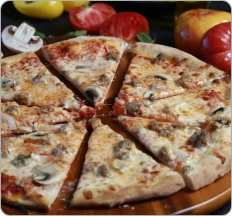
A pizza is open. Everything sits on top, exposed to the heat for the whole time it bakes.
A calzone is closed. The same dough gets folded over the filling and sealed, so instead of toppings you get a pocket of cheese and whatever else you choose, cooked inside rather than on top.
That single difference in construction changes almost everything else about the eating experience. An open pizza cools from the top down. A calzone holds its heat longer because the filling is insulated inside the crust. If you’re planning to eat slowly, or you know your food will sit for ten minutes before anyone touches it, that matters more than it sounds like it should.
What a Calzone Actually Gives You
At Amedeo, the calzone starts as a cheese calzone, with the option to add a topping from the same range used across the pizza menu.
Think of it less as a pizza folded in half and more as its own dish that happens to share an oven with the pizza. The dough seals in moisture, so the cheese inside stays soft and a little looser than melted cheese on an open pie. Whatever topping you add gets tucked in with it, rather than sitting exposed on the surface.
That sealed structure is also why a calzone travels differently than a slice does. Nothing shifts. Nothing slides off. If you’ve ever balanced a pizza box on your lap in the car, you already know why that’s worth something.
Fork and Knife, or Just Your Hands
This is the part people underestimate.
Pizza is built for hands. You fold a slice, you eat it standing up, you eat it out of the box if nobody’s watching.
A calzone is built for a plate. It’s dense, it’s hot all the way through, and cutting into it releases steam and filling you don’t want landing on your lap. Most people eat a calzone with a fork and knife, at least for the first few bites, until it cools enough to pick up.
So the real question isn’t just which one you want to eat. It’s how you’re planning to eat it.
- If you’re eating in the car, at your desk, or standing in the kitchen, pizza is the easier choice.
- If you’re sitting down at a table with a plate in front of you, a calzone works just as well, and arguably holds its heat better while you eat.
- If you’re ordering delivery for a group that’s going to eat whenever they get around to it, pizza reheats and shares more predictably.
None of this makes one option better than the other. It just makes one option better for a specific situation, which is really what you’re trying to figure out.
Portion Size: One Pizza, or One Calzone Each
Pizza scales. A 12″ or 16″ pizza can be cut into six or eight slices and split however a group wants to split it. Two people who are hungry can take three slices each, while someone who isn’t that hungry can take one.
A calzone doesn’t split the same way. It’s built as an individual portion. You can cut it in half to share a bite with someone, but it was designed to be one person’s meal, not a shape everyone pulls from.
That makes the decision fairly simple once you frame it around who’s eating:
- Ordering for one person: a calzone gives you a complete, self-contained meal without any of a pizza’s leftover math.
- Ordering for a group with different appetites: a pizza flexes to fit everyone, since slices can be uneven in a way a single calzone can’t be.
- Ordering for a few people who each want something different: a mix works well. One or two calzones for the people eating alone, one pizza for the table to share.
Amedeo’s full pizza and calzone lineup at amedeo.pizza/the-menu makes it easy to see both formats side by side before you decide.
The 8″ Lunch Calzone: A Different Version of the Same Idea
If you’re ordering during the day, Amedeo’s lunch menu has its own calzone, an 8″ version where you choose two toppings, served with marinara on the side for dipping.
This is worth calling out separately because it changes the math. A full-size calzone at dinner is a substantial, sit-down meal. The 8″ lunch version is scaled for a single midday sitting, enough to actually fill you up without leaving you sluggish for the rest of the afternoon, and quick enough to fit inside a real lunch break.
The marinara on the side is a small detail that matters more than it seems. Instead of sauce baked into the filling, you control exactly how much you want with each bite, which keeps the dough from getting soggy if the food sits for a few minutes before you’re ready to eat.
If lunch is the meal you’re planning around, this smaller calzone is worth comparing against the 10″ personal pizza on the same lunch menu at amedeo.pizza/the-menu. Both are built for one person, but they hand you the food in a completely different way.
Toppings: What Works Folded, What Works Flat
Not every topping behaves the same way once it’s sealed inside dough instead of sitting on top of it.
On a pizza, toppings like mushrooms, bell peppers, and onions cook with direct heat and a little bit of char, which is part of what gives a pizza its flavor. Exposed to the oven, they lose some moisture and concentrate what’s left of it.
Inside a calzone, the same toppings steam more than they roast. They stay softer, release more of their natural moisture into the filling, and blend into the cheese rather than standing apart from it.
That’s not a downside, it’s just different. If you like a topping that stays distinct and slightly crisp at the edges, you’ll probably prefer it on a pizza. If you like a topping that melts into a cohesive, saucy filling, a calzone does that naturally, especially with something like sausage or mushrooms.
Meats like pepperoni, sausage, and bacon hold up well in either format, since fat renders out either way. Vegetables are where the format makes the biggest difference in the final bite.
What You’re Actually Deciding
Strip away the back and forth, and the decision usually comes down to three questions.
Are you eating alone or sharing? A calzone is a complete individual meal. A pizza is built to be divided.
Are you eating right away or later? A calzone holds its heat and shape well if there’s a short delay. A pizza is at its best the moment it’s cut, though it reheats reasonably well too.
Do you want your toppings crisp or blended in? Pizza keeps toppings distinct. A calzone folds everything into one soft, unified bite.
There’s no wrong answer here, just an answer that fits what you’re actually doing with the food once it’s in front of you.
A Practical Way to Order Both
If you genuinely can’t decide, you don’t have to. Ordering a calzone for yourself and a smaller pizza for the table isn’t unusual, and it solves the “what if I want both” problem without forcing a compromise on either dish.
It also works well if you’re ordering for a mixed group, say one person who wants a self-contained meal they can eat with a fork at their desk, and a few others who’d rather share slices while they talk. Building that kind of mixed order takes one trip through Amedeo’s online ordering menu.
Why the Format Even Exists
The calzone’s roots trace back to Naples, the same city that shaped the thin, crisp-crust pizza tradition most people associate with Italian cooking. Italian bakers folded the dough as a practical solution, a way to carry a filled meal without a plate, long before “hand-held food” was something anyone needed to market. Naples’ broader food history, including how the calzone developed alongside the pizza it’s often compared to, is well documented by culinary and cultural resources such as the Britannica overview of Italian cuisine.
That history is part of why Amedeo treats the calzone as its own dish rather than an afterthought bolted onto the pizza menu. Since 2000, Amedeo has built its kitchen around the same wood-fired approach behind its thin, crisp-crust pizzas, the kind of oven heat that gives a calzone’s crust real structure instead of a soft, steamed shell. Founder Raphael brought that method back from Naples specifically because the format matters, not just the flavor inside it.
That’s the difference between a restaurant that offers a calzone because a menu is supposed to have one, and a kitchen that treats it as a genuine alternative to pizza night, built with the same dough and the same oven that made the pizza worth ordering in the first place.
Making the Call
If you’re still on the fence, default to how you’re actually going to eat the meal, not which dish sounds more appealing on paper.
Eating solo, sitting down, wanting something that holds its heat: order the calzone.
Feeding more than one person, wanting flexibility in portions, planning to eat with your hands: order the pizza.
Somewhere in between: order both, and let the table sort out who wants which.
Either way, you’re choosing between two versions of the same craftsmanship, just shaped for a different kind of meal. Amedeo’s full order menu is set up for pickup or delivery, or call ahead if you’d rather talk through toppings before you commit.